💡 Introduction: London’s Crime Problem Gave Birth to a Policing Revolution
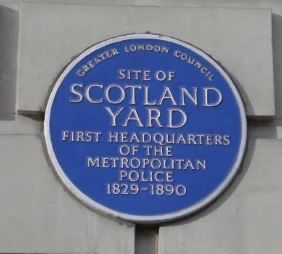
In the early 1800s, London was a booming metropolis—but with that growth came chaos. Streets were dangerous, crime was rampant, and law enforcement was nearly nonexistent. That all changed in 1829, when the British government established the Metropolitan Police Service, headquartered at a place called Scotland Yard.
This wasn’t just the beginning of organized policing in London—it was the birth of modern policing as we know it.
In this post, you’ll discover:
- Why crime forced London to rethink justice
- Who created Scotland Yard and why
- How the police evolved from “Bobbies” to global icons
- Why this legacy still matters today
Let’s step back in time to where it all started.
🏙️ London’s Crime Chaos in the 1800s Exposed the Need for a Real Police Force
London in the early 19th century was bustling, overcrowded, and underprotected. With the Industrial Revolution in full swing, the city’s population was exploding—but its crime prevention system hadn’t changed in centuries.
At the time:
- Night watchmen and parish constables were the only forms of policing.
- They were untrained, part-time, and often corrupt.
- Rising poverty, unemployment, and poor living conditions fueled petty theft, violence, and riots.
People feared walking the streets at night, and justice was hit-or-miss at best.
💡 Interesting Note:
In many cases, victims had to hire private “thief-takers” to catch criminals because no public force existed to do the job.
🧠 Sir Robert Peel Introduced the Metropolitan Police to Transform Public Safety
Enter Sir Robert Peel, Britain’s Home Secretary. He believed the time had come to move from a reactive justice system to a preventive model of policing.
In 1829, Peel pushed the Metropolitan Police Act through Parliament. It created a full-time, professional police force for the Greater London area (excluding the City of London, which had its own force).
The goals?
- Reduce crime through visibility
- Establish law and order without violence
- Create a system that worked with public approval, not fear
The police force launched with about 1,000 men, all dressed in navy blue to distinguish them from the military.
👮♂️ The First Officers—Known as ‘Bobbies’—Patrolled London Without Guns but With Purpose
The new police officers were nicknamed “Bobbies” or “Peelers”, after Sir Robert Peel. They had a strict code of conduct and were trained to:
- Walk regular patrols
- De-escalate conflict
- Use minimal force (they carried only a truncheon and a whistle)
- Maintain a clean, approachable appearance
To join the force, applicants had to meet high standards:
- Be of good moral character
- Possess strong physical fitness
- Read and write (a rare skill at the time)
Unlike the military, their duty wasn’t to control the public—but to serve it.
📌 Key Insight:
The idea that police should be part of the community—not separate from it—was radical for the time.
🗺️ Scotland Yard Got Its Name from a Backstreet in Westminster, Not Scotland
So why is it called Scotland Yard if it’s not in Scotland?
The name comes from the original headquarters located on Great Scotland Yard, a small street near Whitehall in Westminster. The exact origin of the name is unclear, but it may have been the site of the former diplomatic residence for Scottish royalty.
Although the location has moved since then, the name stuck—and today, “Scotland Yard” is synonymous with British policing, especially detective and criminal investigations.
📜 Peel’s Policing Principles Turned Law Enforcement into a Public Service
Peel didn’t just create a police force—he laid down a philosophy that would shape policing around the world. His Nine Principles of Policing focused on:
- Preventing crime without violence
- Gaining public trust and cooperation
- Using force only as a last resort
- Keeping the police accountable to the public
These principles are still taught today in police academies across the globe.
📣 Famous Quote:
“The police are the public and the public are the police.” – Sir Robert Peel
This foundation distinguished British policing from oppressive or military-style enforcement seen elsewhere in Europe at the time.
🌍 Scotland Yard Evolved into a Global Blueprint for Modern Police Work
In 1842, Scotland Yard launched the Detective Branch, later known as the Criminal Investigation Department (CID). This marked the beginning of specialized investigative policing.
Soon, they were:
- Solving high-profile crimes (like the Jack the Ripper case)
- Using forensic science, photography, and criminal profiling
- Expanding into counter-terrorism, fraud, and cybercrime
By the 20th century, Scotland Yard had become a symbol of elite policing, inspiring police departments from New York to New Delhi.
🎬 Pop Culture Moment:
Scotland Yard frequently appears in detective fiction, including Sherlock Holmes, Agatha Christie, and modern crime dramas.
🛡️ Today, Scotland Yard Stands as a Symbol of Trust, Reform, and Community Policing
While the name Scotland Yard now refers to the headquarters of the Metropolitan Police Service, it also represents something more:
- A legacy of reform and professionalism
- A commitment to public service and accountability
- A model for how policing can evolve with society
In 2016, the Metropolitan Police moved to a new building on Victoria Embankment—but kept the iconic “New Scotland Yard” sign, keeping the tradition alive.
Today’s officers face new challenges: cybercrime, terrorism, mental health crises—but the values of community, visibility, and fairness remain central.
🎯 Final Take: Scotland Yard Was More Than a Headquarters—It Was a Turning Point in History
From untrained watchmen to a world-class police force, the story of Scotland Yard is one of vision, courage, and innovation. It turned chaos into order, fear into trust, and history into a legacy that continues to evolve.
Key Takeaways:
- London’s rising crime forced the creation of a formal police force in 1829
- Sir Robert Peel’s policing model emphasized public trust and prevention
- Scotland Yard’s name and detective work became globally recognized
- Its principles continue to influence modern policing worldwide
Fascinated by police history or civic reform? Share this article, visit the City of London Police Museum, or dive into one of Peel’s original Nine Principles—you might be surprised how relevant they still are.

 using WordPress and
Comments are closed